> For the complete documentation index, see [llms.txt](https://primer2.dynamobim.org/llms.txt). Markdown versions of documentation pages are available by appending `.md` to page URLs; this page is available as [Markdown](https://primer2.dynamobim.org/zh-tw/dynamo-for-civil-3d/sample-workflows/rail/clearance-envelope.md).

# 間隙包絡線

<figure><img src="/files/6sXsBJ5F0FrvTDkglfVN" alt=""><figcaption></figcaption></figure>

制定運動包絡線以供間隙驗證，是軌道設計的重要一環。Dynamo 可用來產生包絡線的實體，而不是建立和管理複雜的廊道次組合來執行工作。

## 目標

> :dart: 使用車輛縱斷面圖塊沿廊道產生間隙包絡線 3D 實體。

## 主要概念

> * 使用廊道地勢線
> * 在座標系統之間轉換幾何圖形
> * 透過斷面混成建立實體
> * 使用交織設定控制節點行為

## 版本相容性

{% hint style="success" %}
此圖表將在 \*\*Civil 3D 2020\*\* 及更高版本上執行。
{% endhint %}

## 資料集

首先，下載以下範例檔案，然後開啟 DWG 檔案和 Dynamo 圖表。

{% file src="/files/2XUgtR3Kx165qFa15RNk" %}

{% file src="/files/uqR1ehKJmR86agLauicp" %}

## 解決方法

以下是此圖表中的邏輯概觀。

> 1. 從指定的廊道基準線取得地勢線
> 2. 沿廊道地勢線以所需間距產生座標系統
> 3. 將縱斷面圖塊幾何圖形轉換至座標系統
> 4. 在輪廓之間斷面混成實體
> 5. 在 Civil 3D 中建立實體

我們開始吧！

### 取得廊道資料

我們的第一步是取得廊道資料。我們將依名稱選取廊道模型，取得廊道內的特定基準線，然後依其點代碼取得基準線內的地勢線。

<figure><img src="/files/taL4KB25O9SIfYnvfCqA" alt=""><figcaption><p>選取廊道、基準線和地勢線</p></figcaption></figure>

### 產生座標系統

我們現在要沿廊道地勢線，在指定的起點樁號和終點樁號之間產生 **座標系統** 。這些座標系統將用於將車輛縱斷面圖塊幾何圖形與廊道對齊。

{% hint style="info" %}
如果您不熟悉座標系統，請查看 [向量、平面和座標系統](/zh-tw/5_essential_nodes_and_concepts/5-2_geometry-for-computational-design/2-vectors.md) 一節。
{% endhint %}

<figure><img src="/files/sE0tMtxs8cXu791eajFx" alt=""><figcaption><p>沿廊道地勢線取得座標系統</p></figcaption></figure>

> 1. 請注意節點右下角的小 **XXX**。這表示節點的交織設定已設定為 *笛卡兒積* ，如此才能在兩條地勢線的相同樁號值處產生座標系統。

{% hint style="info" %}
如果您不熟悉節點交織，請查看 [什麼是清單](/zh-tw/5_essential_nodes_and_concepts/5-4_designing-with-lists/1-whats-a-list.md) 一節。
{% endhint %}

### 轉換圖塊幾何圖形

現在，我們需要以某種方式沿地勢線建立一系列車輛縱斷面。我們將使用 **Geometry.Transform** 節點，從車輛縱斷面圖塊定義來轉換幾何圖形。這是一個難以理解的概念，因此在我們查看節點之前，這裡有一個圖表顯示將要發生的情況。

<figure><img src="/files/hC0agZdeRC5EiXvhjy5E" alt=""><figcaption><p>在座標系統之間轉換幾何圖形的視覺圖像。</p></figcaption></figure>

因此，我們基本上是從 *單一* 圖塊定義中取得 Dynamo 幾何圖形，然後移動/旋轉它，同時沿地勢線建立一個陣列。好酷的東西！以下是節點序列的外觀。

<figure><img src="/files/sWwwDc5YQUpu28ZvdMEk" alt=""><figcaption></figcaption></figure>

> 1. 這會從文件中取得圖塊定義。
> 2. 這些節點會取得圖塊內物件的 Dynamo 幾何圖形。
> 3. 這些節點基本上是定義我們要從中轉換幾何圖形的 *來源* 座標系統。
> 4. 最後，此節點會實際執行轉換幾何圖形的工作。
> 5. 請注意此節點上 *最長的* 交織。

以下是我們在 Dynamo 中得到的結果。

<figure><img src="/files/EHXD9P8NHEQ2p5RqrSj2" alt=""><figcaption><p>轉換後的車輛縱斷面圖塊幾何圖形</p></figcaption></figure>

### 產生實體

好消息！辛苦的工作已經完成。我們現在只需在輪廓之間產生實體。這可以透過 **Solid.ByLoft** 節點輕鬆完成。

<figure><img src="/files/gEThaKUgvQlriIChmCjM" alt="" width="325"><figcaption></figcaption></figure>

以下是結果。請記住，這些是 Dynamo 實體 - 我們仍需要在 Civil 3D 中建立它們。

<figure><img src="/files/2lz709AUmebDV40igQxz" alt=""><figcaption><p>斷面混成後的 Dynamo 實體</p></figcaption></figure>

### 將實體輸出至 Civil 3D

我們的最後一步是將產生的實體輸出至模型空間。我們也為它們塗上顏色，比較容易看清楚。

<figure><img src="/files/BaTSThQ6Gc5sXLkghd0a" alt=""><figcaption><p>將實體輸出至 Civil 3D</p></figcaption></figure>

### 結果

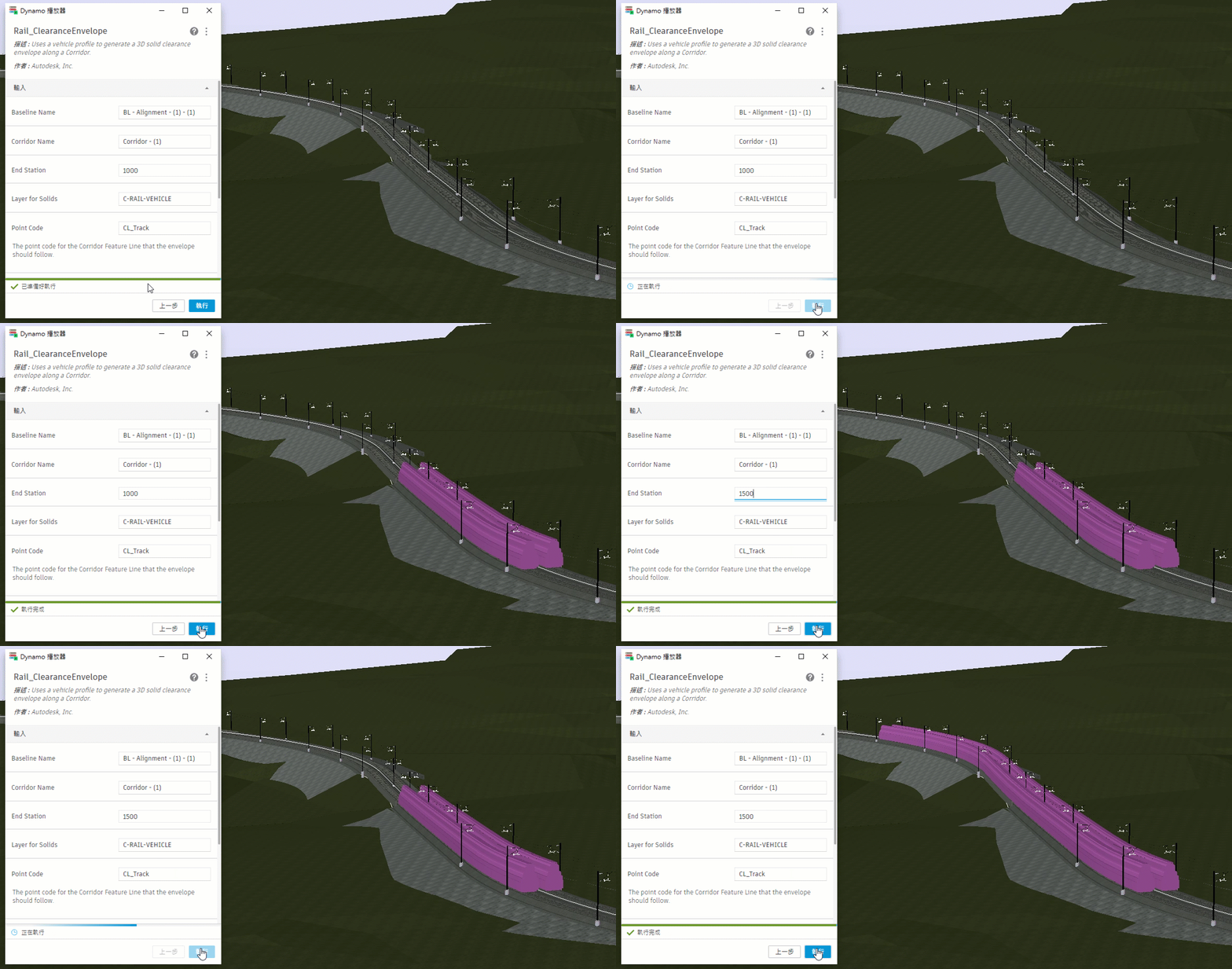
以下是使用 **Dynamo 播放器** 執行圖表的範例。

<figure><img src="/files/6sXsBJ5F0FrvTDkglfVN" alt=""><figcaption><p>使用 Dynamo 播放器執行圖表，然後在 Civil 3D 中查看結果</p></figcaption></figure>

{% hint style="info" %}
如果您不熟悉 Dynamo 播放器，請查看 [Dynamo 播放器](/zh-tw/dynamo-for-civil-3d/dynamo-player.md) 一節。
{% endhint %}

> :tada: 任務完成！

## 構想

以下是一些如何擴充此圖表功能的構想。

{% hint style="info" %}
加入針對每條軌道分別使用 **不同樁號範圍** 的功能。
{% endhint %}

{% hint style="info" %}
**將實體分割** 為可單獨分析衝突的較小區段。
{% endhint %}

{% hint style="info" %}
請檢查包絡線實體是否 **與圖徵相交**，並為發生衝突的實體著色。
{% endhint %}


---

# Agent Instructions
This documentation is published with GitBook. GitBook is the documentation platform designed so that both humans and AI agents can read, navigate, and reason over technical content effectively. Learn more at gitbook.com.

## Querying This Documentation
If you need additional information that is not directly available in this page, you can query the documentation dynamically by asking a question.

Perform an HTTP GET request on the current page URL with the `ask` query parameter, and the optional `goal` query parameter:

```
GET https://primer2.dynamobim.org/zh-tw/dynamo-for-civil-3d/sample-workflows/rail/clearance-envelope.md?ask=<question>&goal=<endgoal>
```

`ask` is the immediate question: it should be specific, self-contained, and written in natural language.
`goal` is optional and describes the broader end goal you are ultimately trying to accomplish on behalf of the user. GitBook uses it to tailor the answer towards what is most useful for that goal.

The response will contain a direct answer to the question and relevant excerpts and sources from the documentation.

Use this mechanism when the answer is not explicitly present in the current page, you need clarification or additional context, or you want to retrieve related documentation sections.