> For the complete documentation index, see [llms.txt](https://primer2.dynamobim.org/llms.txt). Markdown versions of documentation pages are available by appending `.md` to page URLs; this page is available as [Markdown](https://primer2.dynamobim.org/ko/dynamo-for-civil-3d/sample-workflows/surveying/point-group-management.md).
# 점 그룹 관리
Civil 3D에서 COGO 점 및 점 그룹으로 작업하는 것은 많은 필드-마감 프로세스의 핵심 요소입니다. 이 예제에서는 데이터 관리와 관련하여 Dynamo가 매우 유용할 수 있는 잠재적인 사용 사례 하나를 보여드리겠습니다.
## 목표
> :dart: 고유한 각 COGO 점 설명에 대한 점 그룹을 작성합니다.
## 주요 개념
> * 리스트 작업
> * **List.GroupByKey** 노드로 유사 객체 그룹화
> * Dynamo 플레이어에 사용자 출력 표시
## 버전 호환성
{% hint style="success" %}
이 그래프는 **Civil 3D 2020** 이상에서 실행됩니다.
{% endhint %}
## 데이터세트
먼저 아래의 샘플 파일을 다운로드한 다음 DWG 파일과 Dynamo 그래프를 엽니다.
{% file src="/files/KL1YSyMfnzO3Q2abeKfB" %}
{% file src="/files/11uXVhdxTyWA7hbvggAB" %}
## 해결 방법
이 그래프의 논리에 대한 개요는 다음과 같습니다.
> 1. 문서의 모든 COGO 점 가져오기
> 2. 설명별로 COGO 점 그룹화
> 3. 점 그룹 작성
> 4. Dynamo 플레이어에 요약 출력
그럼 시작하겠습니다!
### COGO 점 가져오기
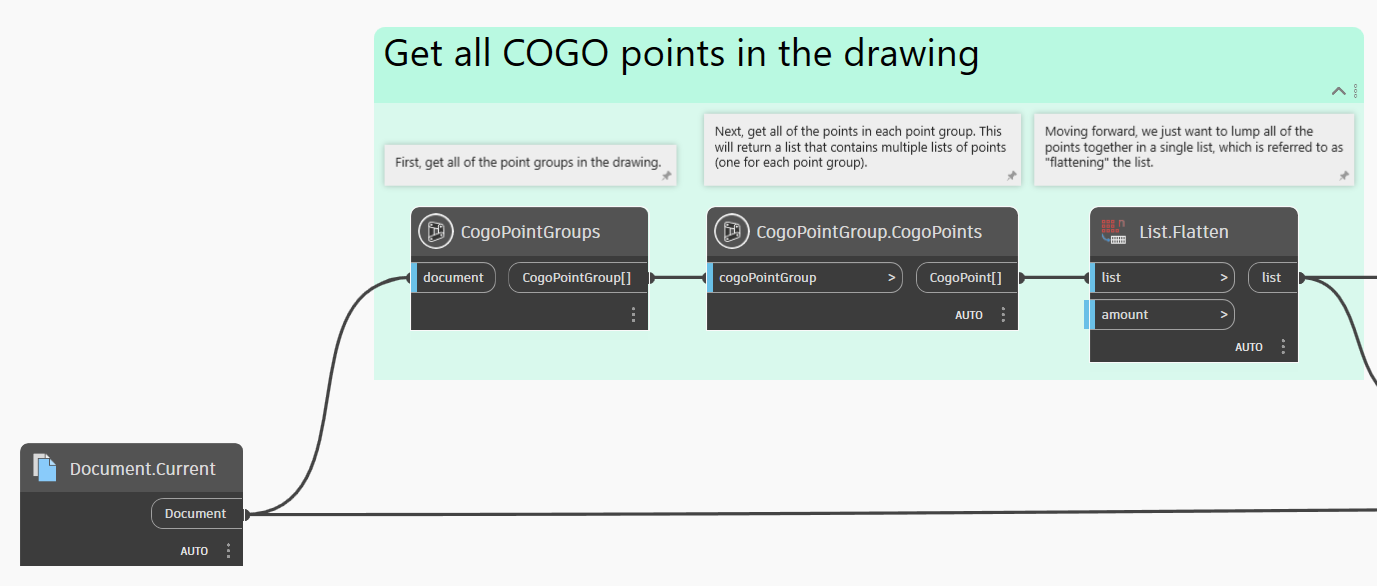
첫 번째 단계는 문서의 모든 점 그룹을 가져온 다음 각 그룹 내의 모든 COGO 점을 가져오는 것입니다. 그러면 *내포된 리스트* 또는 "리스트의 리스트"가 생성되며, **List.Flatten** 노드를 사용하여 모든 것을 단일 리스트로 단순화하면 나중에 작업하기가 더 쉬워집니다.
{% hint style="info" %}
리스트 작업을 처음 해보는 경우 [리스트 작업](/ko/5_essential_nodes_and_concepts/5-4_designing-with-lists/2-working-with-lists.md) 섹션을 참조하십시오.
{% endhint %}
모든 점 그룹 및 COGO 점 가져오기
### 설명별로 점 그룹화
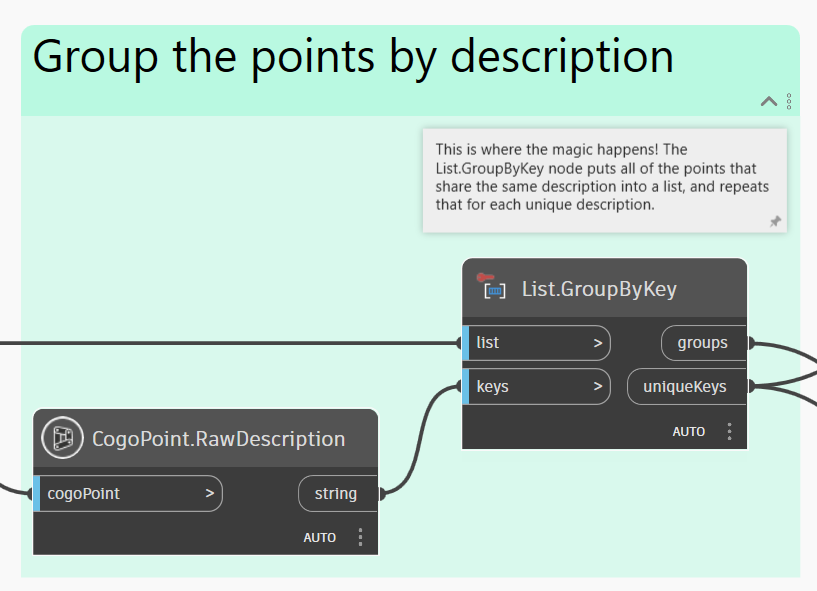
이제 모든 COGO 점이 있으므로 해당 설명을 기준으로 점을 그룹으로 분리해야 합니다. 이것이 바로 **List.GroupByKey** 노드의 역할입니다. 이 노드는 기본적으로 동일한 키를 공유하는 모든 항목을 그룹화합니다.
설명별로 COGO 점 그룹화
### 점 그룹 작성
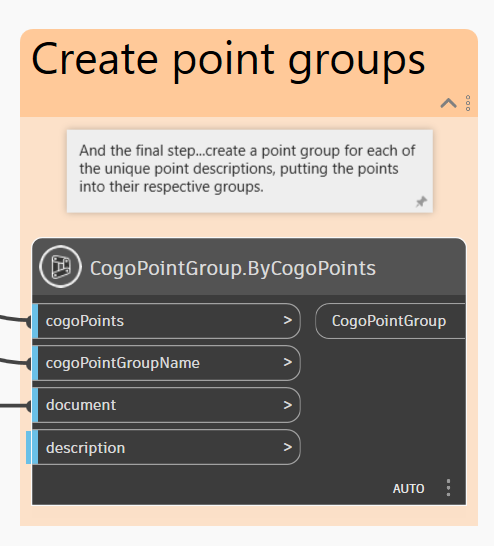
힘든 작업은 끝났습니다! 마지막 단계는 그룹화된 COGO 점에서 새 Civil 3D 점 그룹을 작성하는 것입니다.
새 점 그룹 작성
### 출력 요약
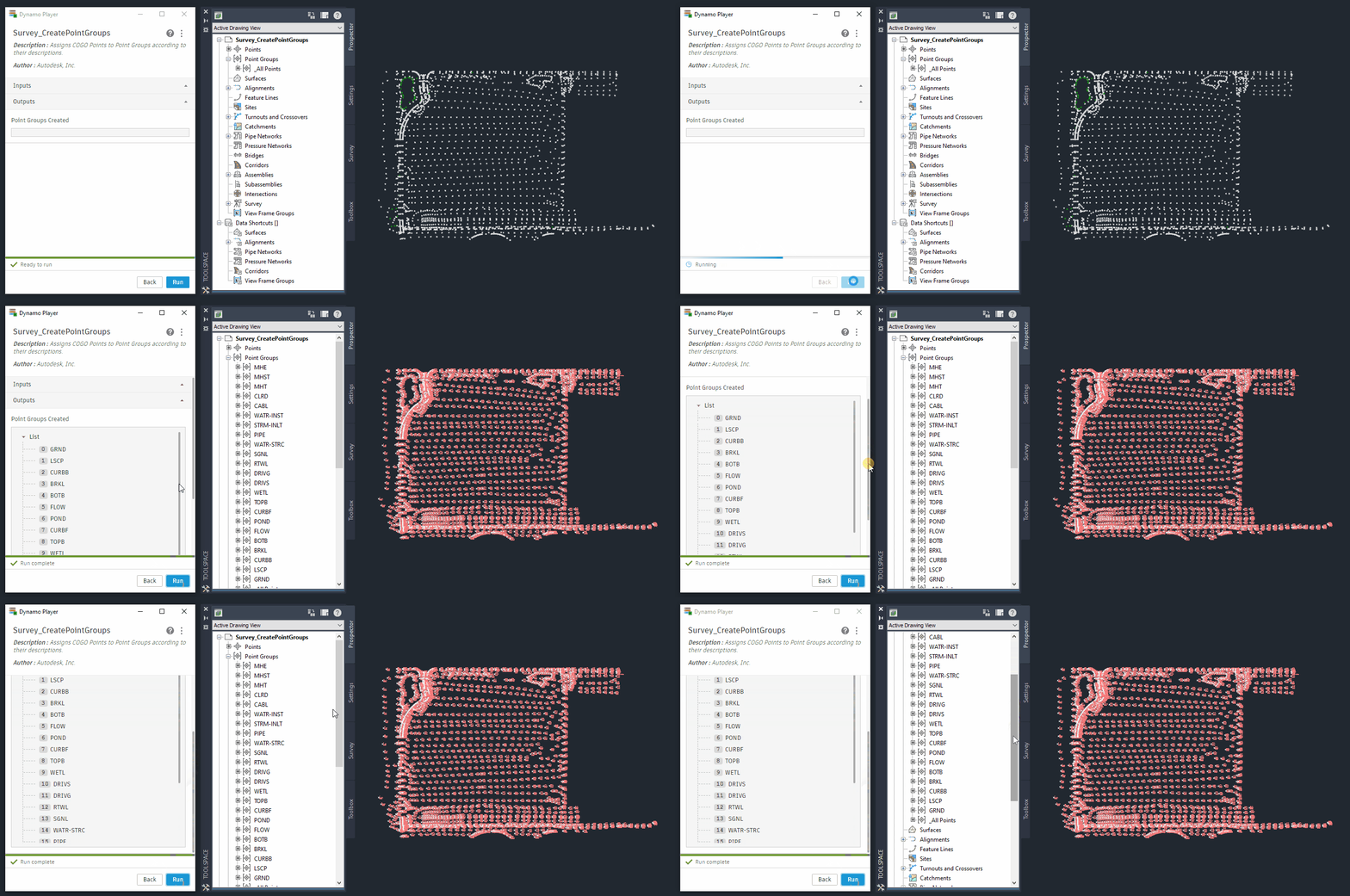
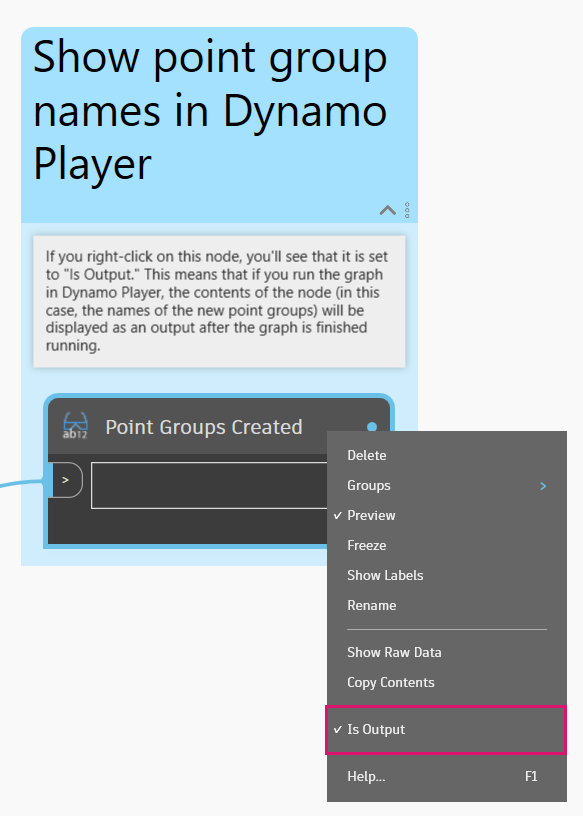
그래프를 실행할 때, 우리는 형상에 대한 작업을 하지 않을 것이기 때문에 Dynamo 배경 미리보기에 아무것도 표시되지 않습니다. 따라서 그래프가 제대로 실행되는지 확인할 수 있는 유일한 방법은 도구공간을 확인하거나 노드 출력 미리보기를 보는 것입니다. 그러나 **Dynamo 플레이어** 를 사용하여 그래프를 실행하면 작성된 점 그룹에 대한 요약을 출력하여 그래프 결과에 대해 더 많은 피드백을 제공할 수 있습니다. 노드를 마우스 오른쪽 버튼으로 클릭하고 *Is Output* 으로 설정하기만 하면 됩니다. 이 경우 이름이 변경된 **Watch** 노드를 사용하여 결과를 확인합니다.
노드를 Is Output 으로 설정하면 Dynamo 플레이어 출력에 해당 컨텐츠가 표시됩니다.
### 결과
다음은 **Dynamo 플레이어** 를 사용하여 그래프를 실행하는 예입니다.
Dynamo 플레이어를 사용하여 그래프를 실행하고 도구공간에서 결과 확인
{% hint style="info" %}
Dynamo 플레이어를 처음 사용하는 경우 [Dynamo 플레이어](/ko/dynamo-for-civil-3d/dynamo-player.md) 섹션을 참조하십시오.
{% endhint %}
> :tada: 작업을 완료했습니다!
## 아이디어
다음은 이 그래프의 기능을 확장하는 방법에 대한 몇 가지 아이디어입니다.
{% hint style="info" %}
초기 정보 대신 **전체 설명**을 기반으로 점 그룹을 수정합니다.
{% endhint %}
{% hint style="info" %}
원하는 다른 **사전 정의된 카테고리**(예: "지표면 측점", "기준점" 등)에 따라 점을 그룹화합니다.
{% endhint %}
{% hint style="info" %}
특정 그룹의 점에 대해 TIN 지표면을 자동으로 작성합니다.
{% endhint %}